

EV Battery Sensor
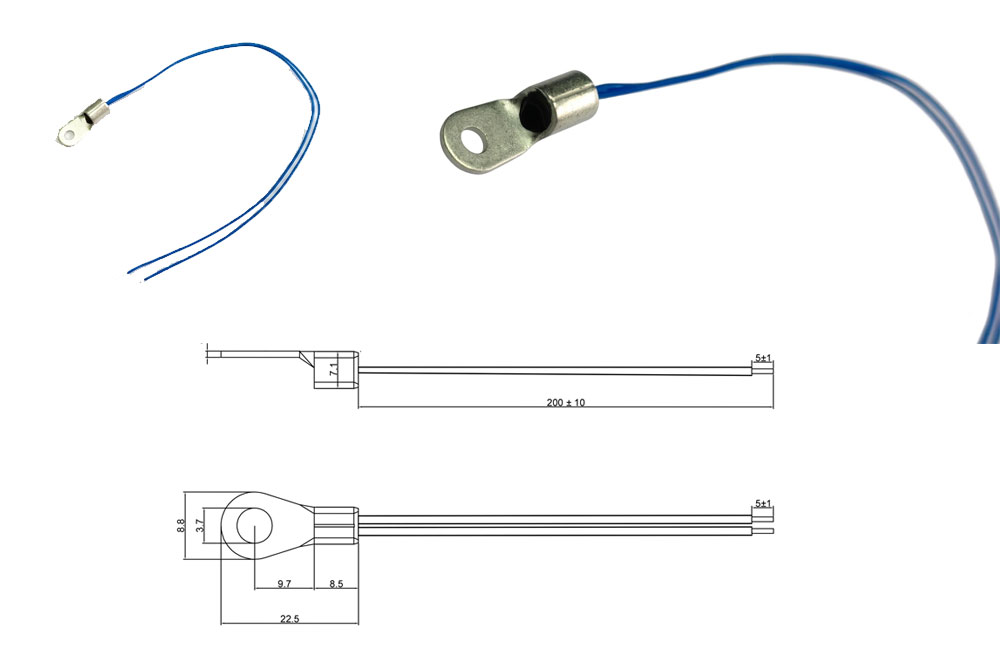
EV BATTERY SENSOR
STH Branded EV Battery Thermistor Sensor is engineered specifically for the rigorous thermal management requirements of Electric Vehicle (EV) battery packs. Designed for high-precision monitoring, it ensures the safety, longevity, and efficiency of lithium-ion cells by providing real-time data to the Battery Management System (BMS). Our group of professionals check and examine our premium line of STTS on different required parameters. We offer EV Battery Sensors at nominal prices to make a long-term relationship with our esteemed customers.
Applications
Prevent overheating, overcharging, and thermal runaway in EV Vehicles
Trigger cooling systems, derating, or shutdown during abnormal conditions in Battery Management System Modules
Help regulate fans, pumps, and thermal control loops in Battery Cooling Systems.
OPTIONS AVAILBLE UPON REQUEST
Encapsulation types: epoxy coated, glass encapsulated bead, metal housing (immersion sensors), chip version.
Lead types: insulated wire leads, bare leads and chip without leads.
Tolerance classes: ±1%, ±3% on Resistance Value and ±1% or ±2% on Beta Value depending on product cost/accuracy.
Lead wire available options: Insulated thin wires, high‑temp wires, connectorized harness, or simple pair of wires available upon request.
RT CHARACTERISTICS (RESISTANCE & BETA VALUES)
| Resistance At 25°C (Ω) | Beta Value (25/85) (K) | |||
| 2000 | 3540 | |||
| 2057 | 3540 | |||
| 2800 | 3900 | |||
| 3000 | 3977 | |||
| 4700 | 3977 | |||
| 5000 | 3977 | |||
| 10000 | 3977 | |||
| Resistance At 25°C (Ω) | Beta Value (25/85) (K) |
| 20000 | 4000 |
| 30000 | 4050 |
| 47000 | 4100 |
| 49300 | 3960 |
| 50000 | 4100 |
| 100000 | 4400 |
| 170000 | 4250 |
* Customization can be possible